

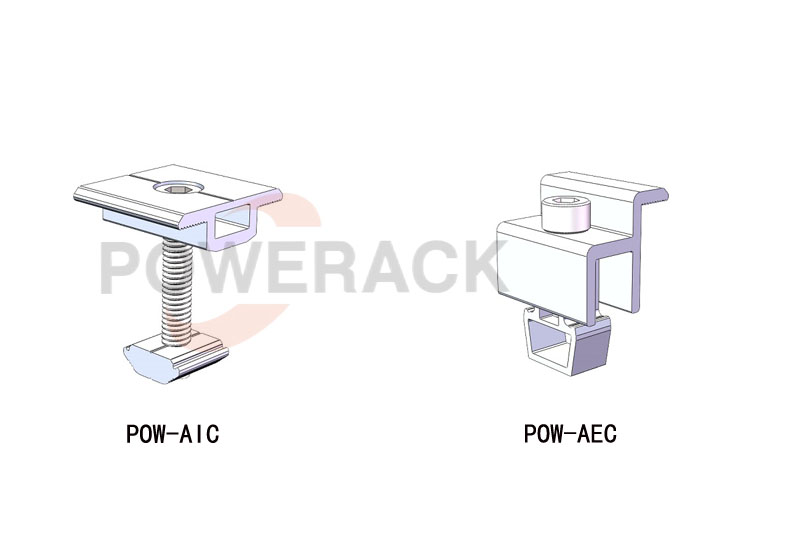
Egy komplett fotovoltaikus rögzítőrendszerben a bilincsek és a sínek elengedhetetlen alapvető alkatrészek.
PV bilincsek: Napelemek rögzítésére szolgáló rögzítőelemek
A PV bilincsek olyan hardverelemek, amelyeket közvetlenül a napelemek rögzítésére használnak. Ezek a naperőművek legalapvetőbb és legszélesebb körben használt alkatrészei, és elsősorban két típusba sorolhatók: középsőbilincsek és végbilincsek. KözépsőA bilincsek a két napelem között megosztott összekötő elemek, míg a végA bilincsek azok az alkatrészek, amelyeket a tömb külső szélein használnak az egyes modulok rögzítésére.
A bilincsek jellemzően alumíniumötvözetből készülnek egy darabból álló extrudálási eljárással, amelynek felületeit eloxálással kezelik a korrózióállóság, a nagy szilárdság és a deformációval szembeni ellenállás biztosítása érdekében. A teljes rögzítőrendszeren belül a bilincsek a modulok oldalirányú rögzítésére szolgálnak, biztonságosan rögzítve a napelemek kereteit, hogy megakadályozzák az elmozdulást vagy a beállítási hibákat erős szél vagy rezgés esetén.
Telepítési szempontból a kiváló minőségű bilincsek ésszerű tágulási rést biztosítanak. Mivel a fotovoltaikus panelek a hőmérsékletváltozások miatt hőtágulnak és összehúzódnak, a minősített bilincsek nem rögzítik mereven a modulokat. Ehelyett biztonságos illeszkedést biztosítanak, miközben lehetővé teszik a tágulást, ezáltal megakadályozva a rejtett repedéseket és a panelek hosszú távú összenyomódás okozta meghibásodását. A rossz minőségű, vékony bilincsek hajlamosak a törésre és a csúszásra, így ezek a fotovoltaikus panelek erős szélben történő leválásának egyik fő okai.
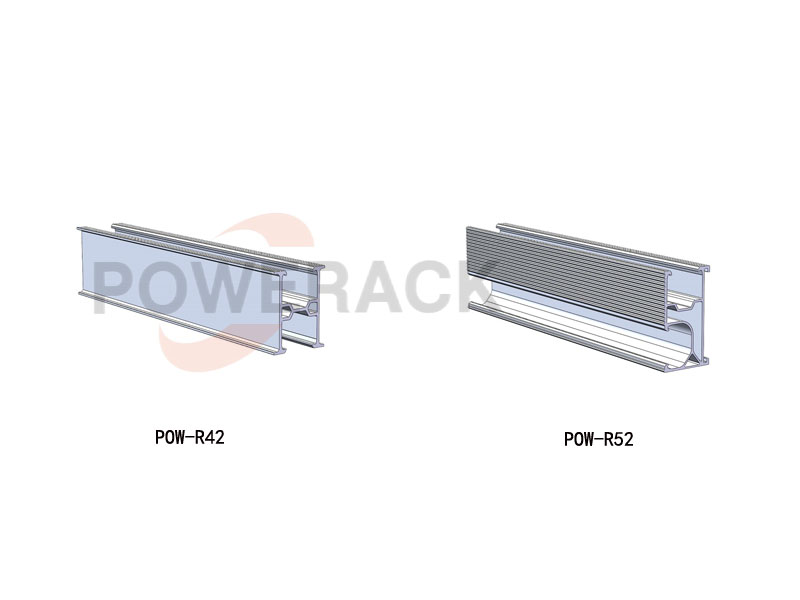
Napelemes sínekA rögzítőrendszer teherhordó főgerendái
Napelemes rgyengélkedik A PV-szerelőrendszer vízszintes teherhordó sínjeiként szolgálnak, a teljes rendszer „fő szerkezeti vázaként” működve. Általában a függőleges oszlopok és az átlós gerendák fölé szerelik őket, és az összes PV-modul ezeken helyezkedik el. A sínek a rögzítőszerkezet és a PV-panelek közötti kritikus összekötő elemek.
A piacon kapható legtöbb sín 6063-T5 alumíniumötvözetből készül, hornyolt keresztmetszettel, amely lehetővé teszi a csavarok csúsztatását a pozícióbeállításhoz, és különböző méretű napelemes modulokat is elférnek rajtuk. A szabványos profilokhoz képest a speciális napelemes sínek nagyobb hajlítószilárdságot és egyenletesebb teherelosztást kínálnak. Hatékonyan elosztják a napelemek súlyát, valamint a szél- és hóterhelést, ezáltal csökkentve a tetőn lévő lokális terhelést. Ez különösen alkalmassá teszi őket korlátozott teherbírású telepítési helyzetekhez, például régebbi tetőkhöz és vidéki cseréptetőkhöz.
Továbbá a sínek sík felülete közvetlenül meghatározza a napelemes rendszer elrendezésének esztétikai megjelenését. A szabványosított sínek lehetővé teszik a modulok közötti távolság és a telepítési szögek pontos szabályozását. Az optimális napfénynek való kitettség beállításához szükséges rögzítőkonzolokkal kombinálva minimalizálják az árnyékolási veszteségeket, és közvetve javítják a napelempark energiatermelési hatékonyságát. Ezenkívül a sínek hornyolt szerkezete elősegíti a víz és a törmelék gyors elvezetését, csökkentve a víz felhalmozódásából eredő korrózió kockázatát.
Akár elosztott fotovoltaikus rendszerekről, akár kereskedelmi és ipari tetőtéri telepítésekről van szó, a minőség biztosítása nap rögzítőelemekelengedhetetlen a rendszer szélállóságának, korrózióállóságának és teherbírásának növeléséhez, ezáltal 25 év stabil működést garantálva.
Ha szeretne többet megtudni a különböző rögzítési megoldásokról és az anyagspecifikációkról, kérjük, hagyjon megjegyzést. Folyamatosan frissítjük a PV rögzítőrendszerekkel kapcsolatos szakmai útmutatóinkat.
Add : 606, No. 12, Huasheng Road, Huli District, Xiamen,China
WhatsApp : +86153 9592 2968
Email : info@powerack.com



 Magyar


